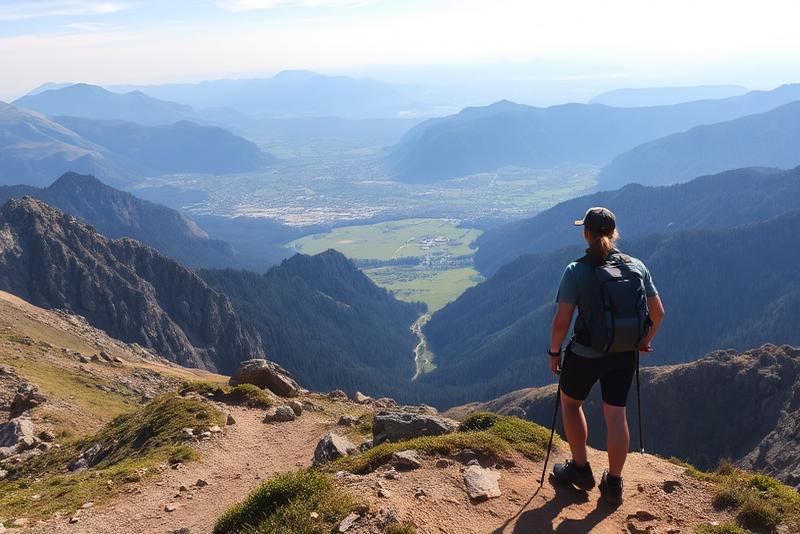
Calculating Calorie Burn for 20,000 Steps
The MET formula applies: Calories = MET × weight (kg) × time (hours). At moderate pace (5 km/h, MET 3.5), 20,000 steps covers approximately 15.0 km and takes about 3 hours. This represents a serious walking commitment equivalent to a half-marathon distance.
Worked example: 70 kg person, 20,000 steps. Distance = 20,000 × 0.75 m = 15,000 m = 15.0 km. Time = 15.0 ÷ 5 = 3.0 hours. Calories = 3.5 × 70 × 3.0 = 735 kcal. Practical estimate: ~700 kcal after accounting for breaks, pace changes, and individual variation.
At this volume, proper hydration and nutrition become essential. You'll burn through approximately 700 kcal of energy — enough to deplete glycogen stores if walking fasted. Carrying water and having a light snack during a 20,000-step walk is recommended for sustained performance.
20,000 Steps: Elite-Level Daily Walking
Fewer than 3% of adults consistently walk 20,000+ steps per day. This level of walking provides extraordinary health benefits but requires significant time commitment — roughly 2.5–3 hours of actual walking. Professional walkers, tour guides, and postal workers in hilly areas often hit this number. The cardiovascular benefits are comparable to running 5–7 km daily, but with far less joint stress.
Massive Calorie Burn Differences by Weight
The weight-based calorie range at 20,000 steps is enormous. A 50 kg walker burns about 500 kcal, while a 100 kg walker burns 1,000 kcal — a full 500-calorie difference. At 120 kg, the burn reaches approximately 1,200 kcal on flat ground. For heavier individuals, 20,000 steps represents one of the most calorie-efficient exercises available — burning a full day's worth of meals through walking alone.
Recovery and Nutrition Considerations
Walking 20,000 steps puts significant demands on your body. You'll cover about 15 km and burn 700+ calories. Proper recovery includes: adequate protein intake (aim for 1.6g per kg body weight), hydration (drink at least 1.5 liters extra), and rest. Many 20,000-step walkers benefit from foam rolling their calves and feet. If you're building up to this distance, increase by 2,000 steps per week.

Calories Burned in 20,000 Steps by Weight
| Body Weight | Flat Ground | Moderate Hills | Trail/Steep |
|---|---|---|---|
| 50 kg (110 lbs) | 583 kcal | 883 kcal | 1000 kcal |
| 55 kg (121 lbs) | 642 kcal | 972 kcal | 1100 kcal |
| 60 kg (132 lbs) | 700 kcal | 1060 kcal | 1200 kcal |
| 65 kg (143 lbs) | 758 kcal | 1148 kcal | 1300 kcal |
| 70 kg (154 lbs) | 817 kcal | 1237 kcal | 1400 kcal |
| 80 kg (176 lbs) | 933 kcal | 1413 kcal | 1600 kcal |
| 90 kg (198 lbs) | 1050 kcal | 1590 kcal | 1800 kcal |
| 100 kg (220 lbs) | 1167 kcal | 1767 kcal | 2000 kcal |
MET-based calculation: Flat = 3.5, Hills = 5.3, Trail = 6.0. Actual results vary by individual fitness, pace, and conditions.
Calorie burn scales with body weight
Bar length shows relative energy expenditure. A heavier body must move more mass per step, so the same step count burns proportionally more calories.
Key takeaway
20,000 steps burns approximately 500–1,120+ calories depending on weight and terrain. At 70 kg on flat ground, expect about 700 kcal. This elite-level daily target requires significant time but delivers exceptional calorie burn and cardiovascular benefits.
Want your exact number?
Real-Life Scenarios
The Travel Day Explorer
A full day sightseeing in a walkable city like Paris, Rome, or Tokyo can easily generate 20,000 steps. At 75 kg walking on mostly flat terrain, that's approximately 750 kcal burned. If the city has hills (think Edinburgh or Dubrovnik), expect 1,100+ kcal. That completely offsets a restaurant dinner with wine and dessert.
The Charity Walk Participant
Many charity walks cover 15–20 km — roughly 20,000 steps. At 70 kg on mixed terrain, you'll burn about 850–1,000 kcal. Training for such events by building up from 10,000 steps over 6–8 weeks not only prepares you physically but also creates a sustainable walking habit that extends well beyond the event.
The Weight Loss Challenge
A 90 kg individual committing to daily 20,000-step walks on flat ground burns 900 kcal per day. Over 30 days, that's 27,000 kcal — equivalent to about 3.5 kg of pure fat loss. Many weight loss challenges recommend 20,000 steps as the daily target because it creates a large enough deficit to produce visible results within 2–3 weeks.

In summary: 20,000 steps burns approximately 500–1,120+ calories depending on weight and terrain. At 70 kg on flat ground, expect about 700 kcal. This elite-level daily target requires significant time but delivers exceptional calorie burn and cardiovascular benefits.