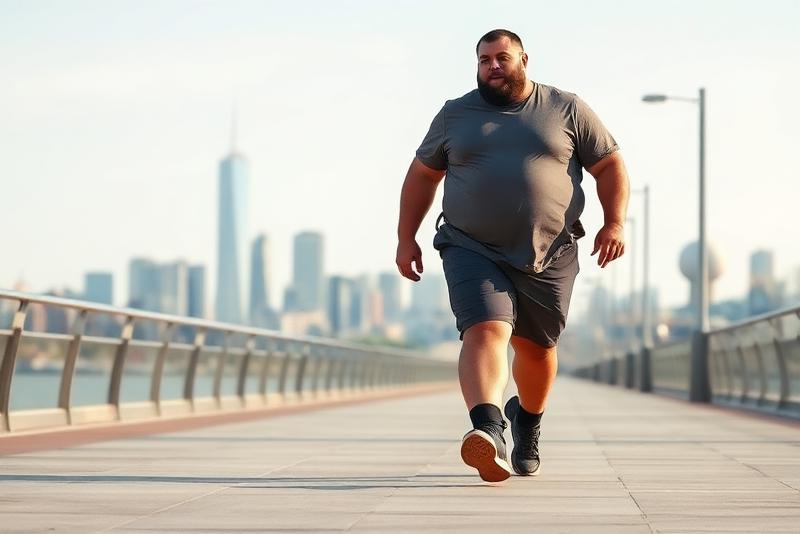
When Walking Officially Counts as Exercise
WHO defines moderate-intensity aerobic exercise as 3.0–5.9 METs. Brisk walking at 5.5–6.5 km/h sits at ~4.3–5.0 METs — clearly inside that range.
Slow walking (3.5–4.5 km/h) is ~2.8–3.2 METs — right at the boundary. Beneficial for cardiovascular health, but not technically 'moderate exercise'.
Cadence rule: 100 steps/min = moderate intensity for most adults. Above 130 = vigorous. Below 100 = light activity.
The 150 min/week target
WHO recommends 150 min of moderate-intensity aerobic activity per week. 30 min of brisk walking × 5 days hits that exactly — one of the most accessible ways to meet the guideline.
Why 100 steps/min matters
Tudor-Locke's cadence research established 100 spm as the walking intensity that reliably produces moderate MET values across adult populations. Play music at 100–110 BPM to auto-pace yourself.
Where walking is not enough
For muscular strength and bone density (especially upper body), walking needs a companion. WHO recommends 2+ resistance sessions per week regardless of aerobic activity.
'Exercise snacks' — mini-walks
3-minute brisk walks between meetings, repeated 5x/day, produce measurable fitness improvements (Jenkins et al., 2019). Fragmentation doesn't erase benefit.
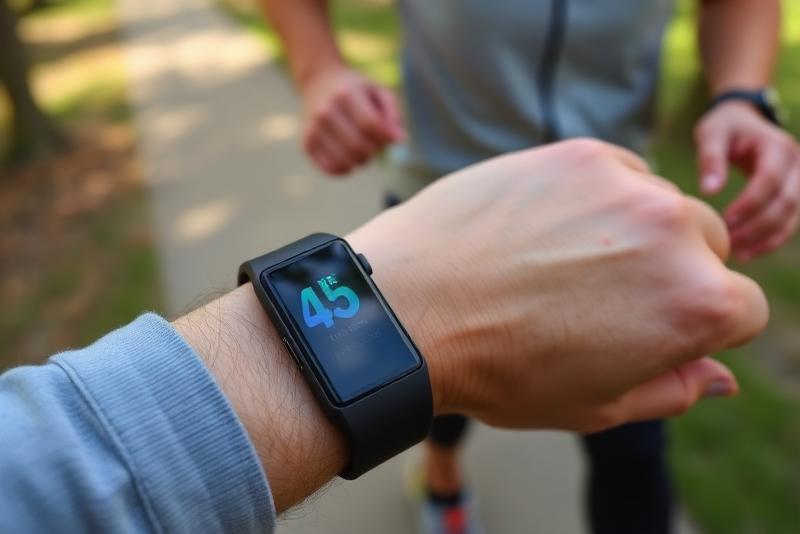
When Walking Officially Counts as Exercise
| Speed | MET | Cadence (spm) | Category | Notes |
|---|---|---|---|---|
| Slow (3.5 km/h) | 2.8 | 70 spm | Light activity | Better than sitting |
| Moderate (5 km/h) | 3.5 | 100 spm | Moderate activity | Near-exercise threshold |
| Brisk (6.5 km/h) | 5.0 | 120 spm | Moderate exercise | Meets WHO guideline |
| Power walk (7.5 km/h) | 6.3 | 135 spm | Vigorous-moderate | Strong cardio training |
| Fast walk (>8 km/h) | 7.5+ | 150+ spm | Vigorous exercise | Race-walker territory |
Categories per ACSM Guidelines for Exercise Testing and Prescription, 11th ed.
How we calculate this (worked example)
Every figure on this page is produced by the same calculation engine as the calculator above — no hardcoded numbers. Here is the full arithmetic for 10,000 steps at 70 kg (154 lbs), moderate pace, flat ground.
- Distance: 10,000 steps × 0.74 m ÷ 1,000 = 7.40 km (4.60 miles)
- Walking time: 7.40 km ÷ 5 km/h × 60 = 1h 29m (89 minutes)
- Calories: 3.5 MET × 70 kg × 3.5 ÷ 200 × 89 min = 381 kcal
- Per step: 381 kcal ÷ 10,000 steps = 0.038 kcal per step
10,000 steps by body weight
| Body weight | Distance | Walking time | Calories burned |
|---|---|---|---|
| 55 kg (121 lbs) | 7.40 km (4.60 mi) | 1h 29m | 299 kcal |
| 70 kg (154 lbs) | 7.40 km (4.60 mi) | 1h 29m | 381 kcal |
| 85 kg (187 lbs) | 7.40 km (4.60 mi) | 1h 29m | 462 kcal |
| 100 kg (220 lbs) | 7.40 km (4.60 mi) | 1h 29m | 544 kcal |
Distance and time are identical across weights (7.4 km at 0.74 m stride) because only energy expenditure scales with body mass.
Definitions
- Step
- One single footfall. Two steps make one full stride cycle, so a pedometer counting 10,000 steps records 5,000 complete left-right cycles.
- Stride length
- The horizontal distance covered by one step, measured heel-to-heel. We use 0.74 m (2.43 ft) as the average adult value, or 0.415 × height in cm for men and 0.413 × height for women.
- Walking distance
- Steps × stride length. Distance in kilometres = (steps × stride in metres) ÷ 1,000; miles = kilometres × 0.621371.
- Calories burned
- Energy expenditure estimated with the MET equation: kcal = MET × weight (kg) × 3.5 ÷ 200 × minutes. Moderate walking at 5 km/h is MET 3.5.
- Walking time
- Distance ÷ walking speed. At the 5 km/h baseline, one kilometre takes 12 minutes and one mile takes about 19 minutes.
- Cadence
- Steps per minute. A moderate 5 km/h pace corresponds to roughly 100–110 steps per minute; brisk walking is 120+ steps per minute.
Assumptions and rounding rules
| Parameter | Default | Rule |
|---|---|---|
| Stride length | 0.74 m (2.43 ft) | Average adult; overridden by your height or entered stride |
| Walking pace | 5 km/h (3.1 mph) | Moderate, flat ground; reduced 20% on hills and 30% on trails |
| MET value | 3.50 | Flat terrain, moderate fitness; +0.1 MET per 1% incline |
| Body weight | 70 kg (154 lbs) | Reference weight for examples; your input replaces it |
| Distance rounding | 2 decimals (km and miles) | Rounded for display only — full precision is used in the maths |
| Calorie rounding | Nearest whole kcal | Rounded at the last step, never mid-calculation |
| Step rounding | Nearest whole step | Reverse calculations round to the nearest integer step |
Limitations
- All results are estimates, not measurements. MET-based calorie models typically fall within ±10–20% of indirect calorimetry for an individual.
- Individual differences in gait efficiency, age, body composition and fitness change actual energy cost at the same speed.
- Terrain, surface softness, wind and altitude are only partly captured by the terrain and incline settings.
- Stride length varies with pace, footwear and fatigue; a single average stride cannot represent a whole walk.
- Pedometers and phone accelerometers miscount steps by roughly 5–15%, especially at slow speeds or when carried in a bag.
- Figures describe activity energy expenditure only and exclude resting metabolism, so they should not be subtracted twice from a daily budget.
Method: stride-based distance plus the MET equation from the Compendium of Physical Activities (Ainsworth et al.). Results are estimates — see our estimation disclaimer.
Key takeaway
Brisk walking (5.5+ km/h, 100+ spm) counts as moderate-intensity aerobic exercise per WHO/ACSM. Slow walking is beneficial activity but under the exercise threshold.
Want your exact number?
Real-Life Scenarios
The commuter
20 min brisk walking to the train station + 20 min back = 40 min moderate exercise/day. In 5 workdays: 200 min — clears WHO by 33%.
The parent
School run at brisk pace (kids on scooter, parent walking fast): 25 min × 2/day = 50 min moderate exercise. Enough on its own.
The senior
Even 4 km/h counts as beneficial activity at age 65+. Chase pace only if joints and cardio allow.

In summary: Brisk walking (5.5+ km/h, 100+ spm) counts as moderate-intensity aerobic exercise per WHO/ACSM. Slow walking is beneficial activity but under the exercise threshold.