How the 10 km Time Is Calculated
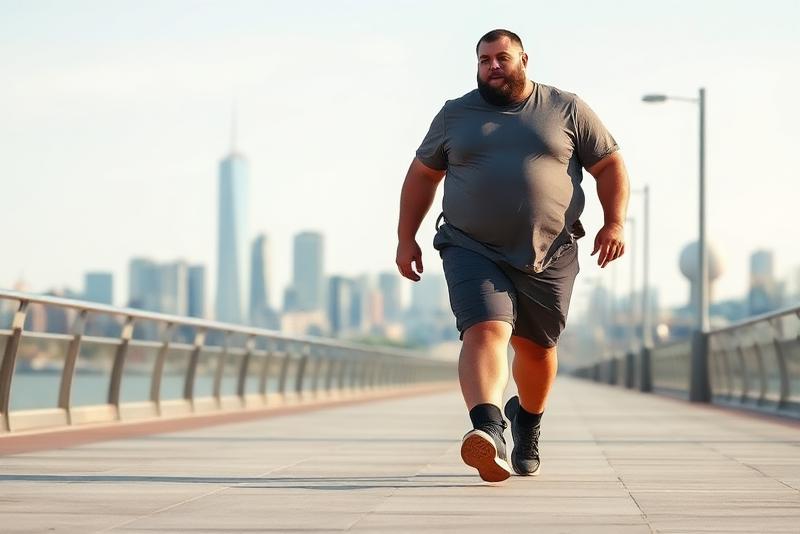
Time = distance ÷ speed. At 5 km/h moderate: 10 ÷ 5 = 2.0 hours ≈ 120 minutes.
At 6.5 km/h brisk (fast enough to lightly puff): 92 minutes. Slow strolling at 4 km/h: 150 minutes — a 60–70% time increase over brisk.
In steps, 10 km ≈ 13,513 steps at a 0.74 m stride. A shorter walker (0.66 m/step) needs about 15,151 steps; a taller walker (0.79 m/step) about 12,658.
The pace-time relationship
Speed drops time linearly. Doubling your pace from 4 km/h to 8 km/h halves the time. But the calorie burn per km rises with brisk walking because MET goes from 2.8 to 5.0 — you cover the 10 km faster AND burn more per km.
Terrain and incline adjustments
Hilly routes add 10–20% to your 120-min moderate estimate. A steady 5% incline (mild hill or treadmill setting) adds ~15% time and ~30% calories. Trail surfaces (dirt, gravel) add ~5% vs. paved sidewalk.
Common walk analogs
10 km is comparable to a solid weekend hike distance. Plan 97 min end-to-end including stoplights and photo stops.
How walking speed changes with age
Average walking speed drops ~1% per year after age 40. A fit 30-year-old averages 5.2 km/h; a fit 70-year-old averages ~4.2 km/h. Personal fitness matters far more than age within any decade.
How Long 10 km Takes at Different Paces
| Pace | Time | Steps | Calories (70 kg) |
|---|---|---|---|
| Slow (4 km/h) | 150 min | 13,513 steps | 514 kcal (70 kg) |
| Moderate (5 km/h) | 120 min | 13,513 steps | 559 kcal (70 kg) |
| Brisk (6.5 km/h) | 92 min | 13,513 steps | 565 kcal (70 kg) |
| Power walk (7.5 km/h) | 80 min | 13,513 steps | 617 kcal (70 kg) |
Times assume flat ground. Add 10–15% on hilly routes.
How we calculate this (worked example)
Every figure on this page is produced by the same calculation engine as the calculator above — no hardcoded numbers. Here is the full arithmeticfor 10,000 steps at 70 kg (154 lbs), moderate pace, flat ground.
- Distance: 10,000 steps × 0.74 m ÷ 1,000 = 7.40 km (4.60 miles)
- Walking time: 7.40 km ÷ 5 km/h × 60 = 1h 29m (89 minutes)
- Calories: 3.8 MET × 70 kg × 3.5 ÷ 200 × 89 min = 413 kcal
- Per step: 413 kcal ÷ 10,000 steps = 0.041 kcal per step
10,000 steps by body weight
| Body weight | Distance | Walking time | Calories burned |
|---|---|---|---|
| 55 kg (121 lbs) | 7.40 km (4.60 mi) | 1h 29m | 325 kcal |
| 70 kg (154 lbs) | 7.40 km (4.60 mi) | 1h 29m | 413 kcal |
| 85 kg (187 lbs) | 7.40 km (4.60 mi) | 1h 29m | 502 kcal |
| 100 kg (220 lbs) | 7.40 km (4.60 mi) | 1h 29m | 591 kcal |
Distance and time are identical across weights (7.4 km at 0.74 m stride) because only energy expenditure scales with body mass.
Definitions
- Step
- One single footfall. Two steps make one full stride cycle, so a pedometer counting 10,000 steps records 5,000 complete left-right cycles.
- Stride length
- The horizontal distance covered by one step, measured heel-to-heel. We use 0.74 m (2.43 ft) as the average adult value, or 0.415 × height in cm for men and 0.413 × height for women.
- Walking distance
- Steps × stride length. Distance in kilometres = (steps × stride in metres) ÷ 1,000; miles = kilometres × 0.621371.
- Calories burned
- Total (gross) energy expenditure estimated with the MET equation: kcal = MET × weight (kg) × 3.5 ÷ 200 × minutes. Unmodified level walking at 3.1 mph (5 km/h) uses 3.8 MET from the 2024 Adult Compendium, code 17190, matching the walking planner and calorie comparison. The equation's 3.5 is the oxygen-conversion constant, not the walking MET. Distinct terrain, incline and fitness options retain their separately scoped legacy heuristics.
- Walking time
- Distance ÷ walking speed. At the 5 km/h baseline, one kilometre takes 12 minutes and one mile takes about 19 minutes.
- Cadence
- Steps per minute. A moderate 5 km/h pace corresponds to roughly 100–110 steps per minute; brisk walking is 120+ steps per minute.
Assumptions and rounding rules
| Parameter | Default | Rule |
|---|---|---|
| Stride length | 0.74 m (2.43 ft) | Average adult; overridden by your height or entered stride |
| Walking pace | 5 km/h (3.1 mph) | Moderate, flat ground; reduced 20% on hills and 30% on trails |
| MET value | 3.80 | Flat terrain, moderate fitness; +0.1 MET per 1% incline |
| Body weight | 70 kg (154 lbs) | Reference weight for examples; your input replaces it |
| Distance rounding | 2 decimals (km and miles) | Rounded for display only — full precision is used in the maths |
| Calorie rounding | Nearest whole kcal | Rounded at the last step, never mid-calculation |
| Step rounding | Nearest whole step | Reverse calculations round to the nearest integer step |
Limitations
- All results are estimates, not measurements. MET-based calorie models typically fall within ±10–20% of indirect calorimetry for an individual.
- Individual differences in gait efficiency, age, body composition and fitness change actual energy cost at the same speed.
- Terrain, surface softness, wind and altitude are only partly captured by the terrain and incline settings.
- Stride length varies with pace, footwear and fatigue; a single average stride cannot represent a whole walk.
- Pedometers and phone accelerometers miscount steps by roughly 5–15%, especially at slow speeds or when carried in a bag.
- Figures describe total (gross) energy during the walk, including resting metabolism. Activity-related (active) energy subtracts 1 MET of resting expenditure for the same duration. Gross and active calories are two views of the same walk, not amounts to add together; do not count the resting portion again in a daily energy budget.
Method: stride-based distance plus the MET equation from the Compendium of Physical Activities (Ainsworth et al.). Results are estimates — see our estimation disclaimer.
Calorie burn scales with body weight
Bar length shows relative energy expenditure. A heavier body must move more mass per step, so the same step count burns proportionally more calories.
Key takeaway
10 km takes ~120 min moderate, ~92 min brisk, and is roughly 13,513 steps.
Want your exact number?
Real-Life Scenarios
Commuter
If your commute is 10 km, budget 94 min door-to-door — enough to hit brisk pace without needing a change of clothes.
Errand runner
For a 10 km round trip (grocery, pharmacy, café), plan 240 min walking + 10 min inside. Beats driving under 3 km once parking is factored in.
Weekend explorer
On a park visit, 10 km is 'one full lap' of most large city parks. Bring water for anything over 3 km.
In summary: 10 km takes ~120 min moderate, ~92 min brisk, and is roughly 13,513 steps.