The Math Behind 1,000 Calories
Using the MET formula: Calories = MET × weight (kg) × time (hours). At MET 3.5 (moderate walking) and 70 kg, burning 1,000 kcal requires 4.08 hours of walking. At 5 km/h, that covers 20.4 km — about 28,500 steps with a 0.72m stride length.
Worked example: 80 kg person on flat terrain. Time = 1000 ÷ (3.5 × 80) = 3.57 hours. Distance = 3.57 × 5 = 17.86 km. Steps = 17,860 ÷ 0.72 = ~24,800 steps. On hills (MET 5.3), the same person needs only ~16,400 steps.
This is a major workout. Most people split a 1,000-calorie walking goal across multiple sessions or an entire active day. Marathon walkers routinely achieve this in a single event.
Calories Burned Per Step at Higher Totals
The calorie-per-step rate remains constant regardless of total steps: about 0.035 kcal/step at 70 kg. What changes at higher targets is the time and distance commitment. Walking 28,500 steps is roughly 4 hours — similar to a half-marathon distance. Planning hydration and rest breaks becomes important at this level.
Weight as the Key Multiplier
A 100 kg person burns 1,000 calories in about 20,000 steps — nearly 15,000 fewer than a 55 kg person. This 43% reduction demonstrates why weight is the single most impactful variable. For heavier individuals, a 1,000-calorie walking goal is genuinely achievable within a long walk or active day.
Speed and Intensity Adjustments
Increasing pace from 5 km/h to 6.5 km/h raises MET from 3.5 to 5.0. This 43% intensity boost means a 70 kg person burns 1,000 calories in approximately 20,000 steps instead of 28,500. Race-walking at 7+ km/h (MET ~6.3) further reduces the requirement to about 15,800 steps.
Terrain Multipliers for Big Calorie Goals
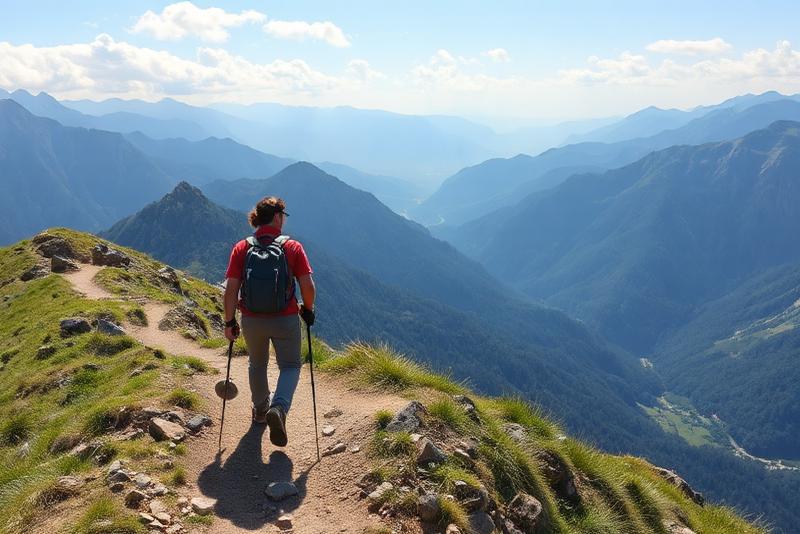
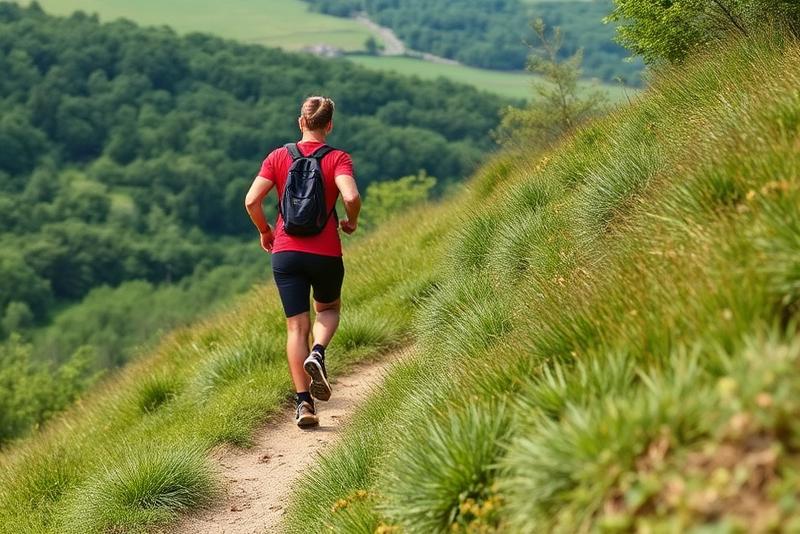
For a 1,000-calorie goal, terrain makes a dramatic difference. On hilly trails (MET 6.0), a 70 kg person needs only about 16,600 steps — 42% fewer than on flat ground. A full day of mountain hiking easily exceeds 1,000 calories for most adults, making trail-based approaches the most efficient strategy.
Steps to Burn 1,000 Calories by Weight & Terrain
| Weight | Flat Ground | Hilly Terrain | Trail / Mountain |
|---|---|---|---|
| 55 kg (121 lbs) | ~31,200 | ~20,600 | ~18,200 |
| 65 kg (143 lbs) | ~26,400 | ~17,400 | ~15,400 |
| 70 kg (154 lbs) | ~24,500 | ~16,200 | ~14,300 |
| 80 kg (176 lbs) | ~21,400 | ~14,200 | ~12,500 |
| 90 kg (198 lbs) | ~19,000 | ~12,600 | ~11,100 |
| 100 kg (220 lbs) | ~17,100 | ~11,300 | ~10,000 |
Moderate pace (5 km/h). Flat MET: 3.5, Hills MET: 5.3, Trail MET: 6.0. Stride: 0.72–0.78m.
Key takeaway
Burning 1,000 calories from walking takes about 28,500 steps for a 70 kg person on flat ground — roughly 21 km. Hills and brisk pace can cut this to under 17,000 steps. Use the calculator above for your personalized result.
Want your exact number?
Real-Life Scenarios
🟢 Weekend Warrior — Tom, 85 kg
Tom does a 4-hour nature hike every Saturday on moderately hilly trails. At 85 kg and a MET of 5.3, he burns roughly 1,080 calories across 15,500 steps. He doesn't even need to push hard — a comfortable pace on hilly terrain naturally hits the 1,000-calorie mark.
🟡 Split-Day Strategy — Maria, 65 kg
Maria walks to work (4,500 steps) and back (4,500 steps), then adds a 60-minute evening walk (6,000 steps). Her daily total of 15,000 steps at 65 kg burns about 500 calories. To reach 1,000, she adds a 90-minute brisk walk on weekends — totaling 29,800 steps across the day.
🔴 Ultra-Active — Raj, 75 kg
Raj is training for a walking marathon and routinely covers 30,000+ steps. At 75 kg on mixed terrain (average MET ~4.5), his 30,000 steps burn roughly 1,150 calories. On flat-only routes, the same step count yields about 950 calories — just short of the 1,000 mark.

In summary: Burning 1,000 calories from walking takes about 28,500 steps for a 70 kg person on flat ground — roughly 21 km. Hills and brisk pace can cut this to under 17,000 steps. Use the calculator above for your personalized result.