Breaking Down 1,000 Calories at 80 kg
The math is straightforward: since burning 500 calories at 80 kg requires ~14,290 steps, burning 1,000 calories simply doubles the requirement to ~28,570 steps.
Using the MET formula: (3.5 × 80 × 3.5) / 200 = 4.9 kcal/min. At 100 steps per minute with net adjustment for resting metabolism: 0.035 kcal per step. 1000 ÷ 0.035 = 28,570 steps.
This translates to approximately 22.3 km (13.9 miles) at 0.78 m stride length, requiring about 286 minutes (4 hours 46 minutes) of continuous brisk walking. While this is achievable in a single long walk or hike, most people will benefit from splitting it across the day using multiple sessions.
Is Burning 1,000 Calories Daily Realistic?
For occasional targets (weekends, active days), absolutely. For daily goals, it's ambitious but many active people achieve it — especially those with walking-intensive jobs, hobbies, or commutes. The key is consistency and gradual build-up rather than jumping straight to 28,570 steps from a sedentary baseline.
Splitting 28,570 Steps Across the Day
The most sustainable approach: 7,000 steps in the morning (70 min), 8,000 steps at lunch (80 min), 7,000 steps in the evening (70 min), and 6,570 steps through general activity (stairs, errands, moving around). This produces 28,570 steps with no single session exceeding 80 minutes.
Terrain Strategies to Reduce Steps
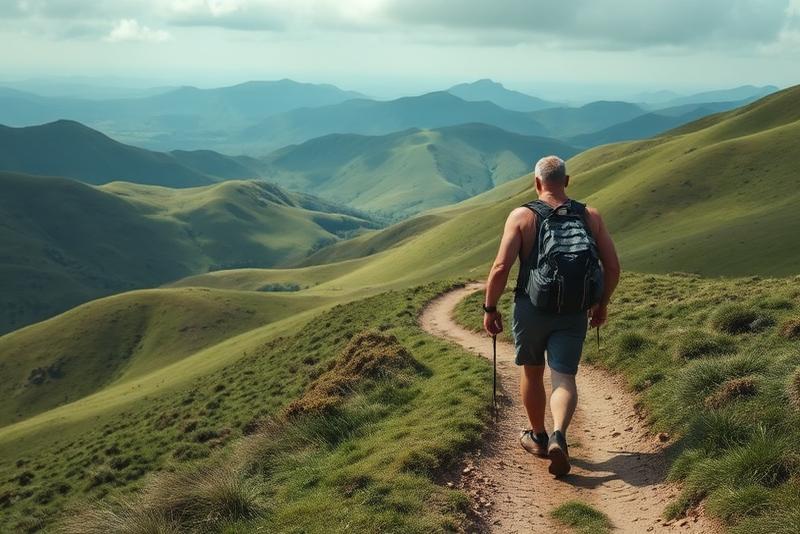
On hilly terrain (MET 6.0), the 1,000-calorie target drops to ~16,670 steps — saving nearly 12,000 steps. Trail walking with moderate elevation (MET 5.0) requires ~20,000 steps. Even a 3% treadmill incline (MET ~4.0) cuts the count to ~25,000. For truly ambitious burns, combine hills with power walking to potentially reach 1,000 calories in under 14,000 steps.
Nutrition and Recovery for 1,000-Calorie Burns
Burning 1,000 calories through walking requires proper fueling. Consume a balanced meal 2–3 hours before long walks, carry water (aim for 500 ml per hour), and eat a protein-rich recovery meal within 60 minutes of finishing. Don't attempt a 1,000-calorie burn on an empty stomach — glycogen depletion will cause fatigue and reduce walking efficiency.
1,000-Calorie Burn Strategies at 80 kg
| Strategy | Steps Needed | Distance (km) | Total Time |
|---|---|---|---|
| Flat brisk walk | ~21,400 | ~16.1 | ~3h 24m |
| Mixed terrain walk | ~18,800 | ~14.1 | ~2h 59m |
| Hilly route (MET 5.0) | ~15,000 | ~11.3 | ~2h 23m |
| Power walk + 5% incline | ~13,100 | ~9.8 | ~2h 5m |
| Trail hike (MET 6.0) | ~12,500 | ~9.4 | ~1h 59m |
| 3 split sessions (flat) | 3 × ~7,100 | 3 × ~5.3 | 3 × ~68m |
All calculations for 80 kg body weight. Split sessions include natural activity between walks.
Key takeaway
Burning 1,000 calories at 80 kg requires about 28,570 steps on flat ground — roughly 22.3 km. Use terrain strategies (hills, trails) to reduce this to 16,000–20,000 steps. Split walks across 3–4 daily sessions for sustainability, stay hydrated, and fuel properly for these ambitious calorie targets.
Want your exact number?
Real-Life Scenarios
The Active Weekend Day
Sarah (80 kg) plans a 1,000-calorie Saturday: morning farmers market walk (4,500 steps), midday 15 km nature hike with hills (14,200 steps, MET ~5.5), afternoon errands on foot (5,500 steps), and an evening neighborhood stroll (4,370 steps). Total: 21,400 steps, 1,000 calories, and a fulfilling active day.
The Workday Challenge
On ambitious days, Sarah walks to work (3,500 steps), takes walking meetings (4,000 steps), does a 45-minute lunchtime power walk (5,850 steps), walks home via a longer route (5,000 steps), hits the treadmill for 40 minutes with incline (5,200 steps), and does an evening walk (5,020 steps). Total: 28,570 steps — it's a full-day commitment but entirely doable.
The Efficient Mountain Hike
For maximum efficiency, Sarah tackles a 13 km mountain trail with 500 m elevation gain (MET ~6.0). She burns 1,000 calories in about 16,670 steps — nearly 12,000 steps fewer than flat walking. The hike takes about 2 hours 47 minutes and doubles as strength training for her legs.

In summary: Burning 1,000 calories at 80 kg requires about 28,570 steps on flat ground — roughly 22.3 km. Use terrain strategies (hills, trails) to reduce this to 16,000–20,000 steps. Split walks across 3–4 daily sessions for sustainability, stay hydrated, and fuel properly for these ambitious calorie targets.