SnapStepsCalc

    Treadmill vs Outdoor Walking — Calories, Impact & Real-World Feel

    At identical speeds, outdoor walking burns 3–5% more calories than treadmill walking because of wind resistance and micro-terrain adjustments. Setting a treadmill to 1% incline closes most of the gap. Both count as valid step-goal activity.

    A

    Quick answer

    70 kg walker, 5 km/h, 45 min: treadmill ≈ 200 kcal, outdoor ≈ 208 kcal, treadmill at 1% incline ≈ 209 kcal. Terrain and weather add ~5–10% real-world variance.

    Numbers use average adult stride and MET-based energy expenditure. See our methodology for the exact formulas and sources.

    SnapStepsCalc TeamPublished July 1, 20267 min read
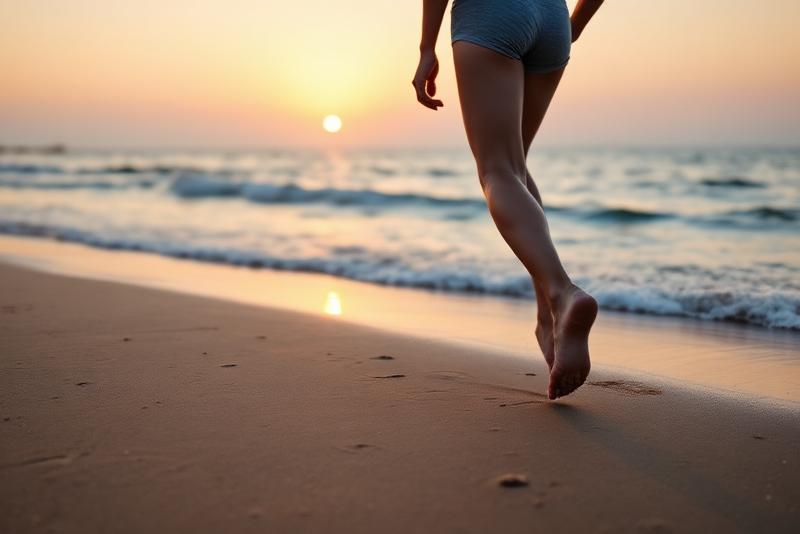
    Treadmill vs Outdoor Walking — walking comparison illustration
    Treadmill vs Outdoor Walking: side-by-side visual overview.

    Choose calculation type

    Enter your step count to see distance, calories & time

    steps

    Enter the number from your fitness tracker, phone, or pedometer

    Add your height, weight, terrain & fitness level for personalized results

    FemaleMale
    lbs

    Used for accurate calorie calculations

    inches

    Enter your height in inches (5'8" = 68 inches)

    ft

    Default: 2.43 ft — enter your height for a personalized stride

    0% (Flat)5% (Moderate)10% (Steep)15%
    US (mi, lbs, ft)Metric (km, kg, m)

    Auto-detected based on your location. Change if needed.

    100% private — all calculations happen in your browser

    👇 Keep reading for detailed breakdown, data tables & real-life examples

    How We Compare

    The classic Jones & Doust study (1996) found 1% treadmill incline matches the metabolic cost of outdoor running — the same applies at walking pace.

    Outdoor walking adds micro-adjustments: slight elevation changes, wind, uneven surfaces — all raise MET marginally.

    Treadmill offers pace control and weather independence, which usually beats theoretical burn differences for consistency.

    Calorie gap in practice

    On flat, still days the gap is 3–5%. On windy days or rolling terrain it can reach 10–15%. Setting 1–2% treadmill incline closes it entirely.

    Joint and posture

    Treadmills provide even shock absorption — gentler on knees. Outdoor walking builds ankle-stabiliser strength thanks to uneven ground.

    Mental & adherence

    Studies (Focht 2009) show mood improvements are larger from outdoor walks. Treadmills win on consistency in bad weather.
    tracking treadmill vs outdoor walking on a fitness watch
    Tracking both options to see the real gap in your data.

    Treadmill vs Outdoor — 45 min at 5 km/h

    WeightTreadmill 0%Treadmill 1%Outdoor flatOutdoor rolling
    55 kg157 kcal164 kcal163 kcal172 kcal
    70 kg200 kcal209 kcal208 kcal219 kcal
    85 kg243 kcal254 kcal252 kcal266 kcal
    100 kg286 kcal299 kcal297 kcal313 kcal

    MET-based estimates. Rolling terrain assumed +5%.

    How we calculate this (worked example)

    Every figure on this page is produced by the same calculation engine as the calculator above — no hardcoded numbers. Here is the full arithmetic for 10,000 steps at 70 kg (154 lbs), moderate pace, flat ground.

    1. Distance: 10,000 steps × 0.74 m ÷ 1,000 = 7.40 km (4.60 miles)
    2. Walking time: 7.40 km ÷ 5 km/h × 60 = 1h 29m (89 minutes)
    3. Calories: 3.5 MET × 70 kg × 3.5 ÷ 200 × 89 min = 381 kcal
    4. Per step: 381 kcal ÷ 10,000 steps = 0.038 kcal per step

    10,000 steps by body weight

    Distance, walking time and calories burned for 10,000 steps at four body weights, moderate pace on flat ground
    Body weightDistanceWalking timeCalories burned
    55 kg (121 lbs)7.40 km (4.60 mi)1h 29m299 kcal
    70 kg (154 lbs)7.40 km (4.60 mi)1h 29m381 kcal
    85 kg (187 lbs)7.40 km (4.60 mi)1h 29m462 kcal
    100 kg (220 lbs)7.40 km (4.60 mi)1h 29m544 kcal

    Distance and time are identical across weights (7.4 km at 0.74 m stride) because only energy expenditure scales with body mass.

    Definitions

    Step
    One single footfall. Two steps make one full stride cycle, so a pedometer counting 10,000 steps records 5,000 complete left-right cycles.
    Stride length
    The horizontal distance covered by one step, measured heel-to-heel. We use 0.74 m (2.43 ft) as the average adult value, or 0.415 × height in cm for men and 0.413 × height for women.
    Walking distance
    Steps × stride length. Distance in kilometres = (steps × stride in metres) ÷ 1,000; miles = kilometres × 0.621371.
    Calories burned
    Energy expenditure estimated with the MET equation: kcal = MET × weight (kg) × 3.5 ÷ 200 × minutes. Moderate walking at 5 km/h is MET 3.5.
    Walking time
    Distance ÷ walking speed. At the 5 km/h baseline, one kilometre takes 12 minutes and one mile takes about 19 minutes.
    Cadence
    Steps per minute. A moderate 5 km/h pace corresponds to roughly 100–110 steps per minute; brisk walking is 120+ steps per minute.

    Assumptions and rounding rules

    Default parameters and rounding rules used in every calculation
    ParameterDefaultRule
    Stride length0.74 m (2.43 ft)Average adult; overridden by your height or entered stride
    Walking pace5 km/h (3.1 mph)Moderate, flat ground; reduced 20% on hills and 30% on trails
    MET value3.50Flat terrain, moderate fitness; +0.1 MET per 1% incline
    Body weight70 kg (154 lbs)Reference weight for examples; your input replaces it
    Distance rounding2 decimals (km and miles)Rounded for display only — full precision is used in the maths
    Calorie roundingNearest whole kcalRounded at the last step, never mid-calculation
    Step roundingNearest whole stepReverse calculations round to the nearest integer step

    Limitations

    • All results are estimates, not measurements. MET-based calorie models typically fall within ±10–20% of indirect calorimetry for an individual.
    • Individual differences in gait efficiency, age, body composition and fitness change actual energy cost at the same speed.
    • Terrain, surface softness, wind and altitude are only partly captured by the terrain and incline settings.
    • Stride length varies with pace, footwear and fatigue; a single average stride cannot represent a whole walk.
    • Pedometers and phone accelerometers miscount steps by roughly 5–15%, especially at slow speeds or when carried in a bag.
    • Figures describe activity energy expenditure only and exclude resting metabolism, so they should not be subtracted twice from a daily budget.

    Method: stride-based distance plus the MET equation from the Compendium of Physical Activities (Ainsworth et al.). Results are estimates — see our estimation disclaimer.

    Calorie burn scales with body weight

    55 kg
    157 kcal
    70 kg
    200 kcal
    85 kg
    243 kcal
    100 kg
    286 kcal

    Bar length shows relative energy expenditure. A heavier body must move more mass per step, so the same step count burns proportionally more calories.

    Key takeaway

    Treadmill and outdoor walking are functionally equivalent for health if you use 1–2% incline indoors. Pick the format you'll actually use most days.

    Want your exact number?

    Real-Life Scenarios

    The winter walker

    Treadmill at 1–2% incline in bad weather; outdoor on dry days. Consistency dwarfs the calorie gap.

    The joint-sensitive walker

    Treadmill's cushioning is a real benefit. Keep incline mild (1–3%).

    The mental-health walker

    Outdoor wins clearly — greenery and daylight amplify mood benefits documented in Focht 2009 and Barton & Pretty 2010.

    recovery after treadmill vs outdoor walking session
    Recovery and hydration matter more as intensity climbs.

    In summary: Treadmill and outdoor walking are functionally equivalent for health if you use 1–2% incline indoors. Pick the format you'll actually use most days.

    Frequently Asked Questions

    Is treadmill walking easier than outdoor?

    Slightly — no wind, flat surface, controlled pace. Set 1% incline to match outdoors.

    How many calories does treadmill walking burn?

    About 200 kcal per 45 min for a 70 kg adult at 5 km/h flat.

    Does treadmill count toward 10,000 steps?

    Yes. Cadence is what matters, not surface.

    Is outdoor walking better for fat loss?

    Marginally — 3–10% more calories in typical conditions, easily equal with treadmill incline.

    Which is better for knees?

    Treadmill's cushioning is gentler; outdoor builds more stabiliser strength.

    Popular Conversion References