Introduction: Why Steps Matter More Than You Think
You've probably heard the advice: walk 10,000 steps a day. It's printed on posters in doctors' offices, embedded in the default settings of fitness trackers, and repeated in countless health articles. But where did that number actually come from — and is it backed by science?
The truth is, most people dramatically underestimate the power of walking. It's the most accessible form of exercise on the planet. You don't need a gym membership, special equipment, or a training plan. You just need to put one foot in front of the other, and your body starts benefiting almost immediately.
In this comprehensive guide, we'll break down everything you need to know about steps. We'll explore how they convert to real-world distance, how many calories they actually burn, and — perhaps most importantly — how many steps you genuinely need each day to reach your health and fitness goals.
Quick Answer: Most adults benefit from 7,000–10,000 steps per day. But even 4,000 steps significantly reduce mortality risk compared to sedentary behavior.

What Are Steps and Why Should You Count Them?
A step is one complete foot movement — from the moment your heel lifts off the ground to when it touches down again. It sounds almost too simple to matter, but those simple movements add up remarkably fast.
The average person takes between 3,000 and 6,000 steps per day without any deliberate effort — just walking around the house, commuting, and going about daily errands. Add some intentional walking to your routine, and you can easily double that number.
Why counting steps works
Step counting has become one of the most popular ways to measure physical activity, and for good reason. Unlike complex workout routines that require planning and motivation, steps are effortlessly measurable. You can glance at your phone or wrist and instantly know where you stand for the day.
There's also something deeply satisfying about watching a step counter climb toward a goal. That sense of progress is motivating in a way that vague advice like "exercise more" simply isn't. And because everyone walks — regardless of age, fitness level, or experience — steps are a universal metric that works for virtually everyone.
The science backs this up powerfully. Research published in JAMA Internal Medicine found that each additional 1,000 steps per day was associated with a 15% lower risk of all-cause mortality. To put that in perspective: if you currently average 4,000 steps and increase to 7,000, you've potentially reduced your mortality risk by nearly 45%.
Example: Going from 4,000 to 7,000 daily steps — roughly an extra 20–25 minutes of walking — could reduce your mortality risk by nearly 45%.
Steps to Distance: The Simple Math
Converting steps to distance is refreshingly straightforward once you know one key number: your stride length.
The formula is simple: Distance = Steps × Stride Length. Your stride length is the distance covered in a single step, measured from heel to heel. It varies from person to person, primarily based on height and walking speed.
This calculator defaults to an average adult stride of 0.74 meters (2.43 feet), which sits between typical male (about 0.78 m) and female (about 0.70 m) averages. That default works reasonably well for quick estimates, but measuring your own stride will always give you more accurate results.
To give you a practical sense of scale: 1,000 steps covers roughly 0.7 to 0.8 kilometers. At 5,000 steps you've walked about 3.5 to 4 kilometers — enough to feel like a proper outing. The classic 10,000-step target translates to roughly 7 to 8 kilometers, and if you're ambitious enough to hit 20,000 steps in a day, you've covered an impressive 14 to 16 kilometers.
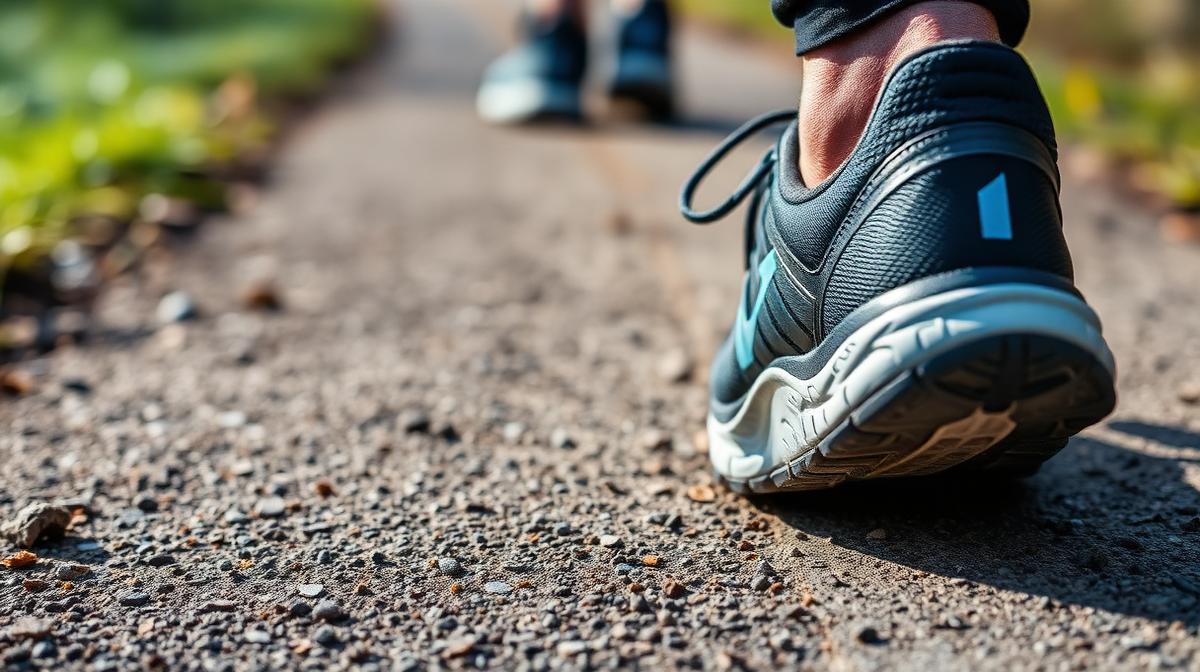
Tip: Your stride length varies with speed. Walking briskly increases it by 10–15% compared to a casual stroll.
Taller people generally have longer strides, so they cover more ground with each step. A person who is 180 cm (5'11") typically has a stride about 15% longer than someone who is 160 cm (5'3"). This means the taller person might cover 8 km in 10,000 steps, while the shorter person covers closer to 6.5 km.
For the most accurate results, take the time to measure your own stride length. Walk 10 steps at your natural pace, measure the total distance, and divide by 10. We cover this in detail in our guide on how step length affects distance. It takes less than a minute and makes every future calculation significantly more precise.
Steps to Calories Burned: What the Science Says
This is where things get genuinely interesting — and where most people are surprised by the numbers.
The calories you burn while walking depend on several interrelated factors. Your body weight is the single biggest influence: it simply takes more energy to move a heavier body. Walking speed matters too, because faster walking requires your muscles to work harder with each step. The terrain plays a role as well — walking uphill demands significantly more effort than strolling on a flat path. And your overall fitness level creates subtle differences, as more trained bodies tend to be slightly more efficient at movement.
The MET formula
Health professionals and fitness researchers use the MET (Metabolic Equivalent of Task) method to estimate calorie burn:
Calories = MET × Weight (kg) × Duration (hours)
Walking at a moderate pace of about 5 km/h (roughly 1,250 steps per kilometer) has a MET value of approximately 3.5. Pick up the pace to a brisk 6.5 km/h and the MET value jumps to about 5.0 — meaning your calorie burn increases by roughly 40% just by walking faster.
To put real numbers on this: a 60 kg person burns around 200 calories over 5,000 steps. Someone weighing 70 kg burns about 245 calories over the same distance, while an 80 kg person burns roughly 280 calories. At 90 kg, you're looking at approximately 315 calories for those same 5,000 steps. The heavier you are, the harder your body works with every single step.
Quick Answer: On average, 10,000 steps burns between 300 and 500 calories depending on your weight and walking speed.
How Step Length Affects Your Results
Step length is the single biggest variable in converting steps to distance — and if you get it wrong, your calculations could be off by 20% or more.
Several factors determine your natural step length. Height and leg length are the most obvious influences, as longer legs naturally produce longer steps. But speed also plays a significant role: when you shift from a casual stroll to a brisk walk, your stride automatically lengthens by 10 to 15 percent. Walking uphill tends to shorten your stride, as does fatigue — after a long walk, your tired legs naturally take smaller steps.
How to measure yours
Measuring your step length is quick and easy. Find a flat surface with a known distance (a running track works perfectly), then walk naturally for 20 steps. Measure the total distance covered and divide by 20. That's your average step length, and you can enter it directly into SnapStepsCalc for personalized results.
Example: If 20 steps covers 14.8 meters, your stride length is 0.74 m — enter this into the calculator for results tailored specifically to you.
Walking vs Running: Calories Compared
One of the most common fitness questions is whether running burns more calories than walking over the same distance. The short answer is yes — but the difference might be smaller than you expect.

For a 70 kg person, walking at 5 km/h burns roughly 55 calories per kilometer. Brisk walking at 6.5 km/h pushes that up to about 65 calories, and running at 10 km/h burns approximately 75 calories per kilometer. That's only about 20–35% more calories for running compared to walking the same distance. For a deeper dive into this comparison, see our full breakdown of walking vs running calories burned.
The bigger difference shows up when you compare calories per hour. Walking burns around 280 calories per hour, brisk walking about 400, and running roughly 700. But here's the catch: most people can walk for an hour every single day without issue, while running that frequently often leads to fatigue, overtraining, or injury.
Tip: If your goal is calorie burn and you have limited time, brisk walking is the sweet spot — significantly more calories than casual walking with much lower injury risk than running.
Daily Step Goals: Finding Your Right Number
Not everyone needs to hit 10,000 steps, and the right goal depends entirely on your current activity level and personal objectives.
If you're currently sedentary and just starting out, 5,000 steps per day is a perfectly respectable target. That translates to roughly 3.5 to 4 kilometers of walking and burns between 150 and 250 calories. It's enough to start seeing health improvements without feeling overwhelming.
For general health maintenance, 8,000 steps per day hits a sweet spot. You'll cover about 5.5 to 6.5 kilometers, burn 250 to 400 calories, and give your cardiovascular system a meaningful daily workout.

The popular 10,000-step target puts you firmly in the "active" category. At 7 to 8 kilometers and 350 to 500 calories burned, this level is excellent for weight management and long-term cardiovascular health. It's where the research shows the strongest benefit-to-effort ratio.
If you're pursuing active weight loss or training for athletic goals, stepping up to 15,000 or more daily steps — around 10.5 to 12 kilometers — takes you into the "highly active" range with 550 to 750 calories burned.
Quick Answer: Research from 2023 suggests the optimal range for health benefits is 7,000–10,000 steps. Beyond 10,000, benefits continue but with diminishing returns.
Weight Loss and Steps: The Real Connection
Walking alone can absolutely contribute to meaningful weight loss — but the math needs to work. To lose approximately 0.5 kg (1 lb) per week, you need a daily caloric deficit of about 500 calories. Walking 10,000 steps burns roughly 350 to 500 calories, which means it can contribute most — or even all — of that deficit on its own.
Combine daily walking with modest dietary changes, and you have a sustainable, enjoyable weight-loss strategy that doesn't require intense gym sessions or restrictive diets.
For a practical timeline: an 80 kg person who adds 10,000 daily steps above their baseline could realistically expect to lose 0.3 to 0.5 kg in the first two weeks, around 1.5 to 2 kg in the first month, 4 to 6 kg after three months, and 7 to 12 kg by the six-month mark — all with consistent walking and no other major changes.
Tip: Consistency beats intensity. Walking 8,000 steps every day is far more effective than walking 20,000 steps twice a week.
Real-World Examples
Let's bring these numbers to life with some concrete scenarios.
At 5,000 steps per day, you're covering about 3.5 km and burning 150 to 250 calories. This is roughly equivalent to a 45-minute walk — enough for basic health maintenance, and a great starting point if you're building a new walking habit.
At 10,000 steps, the picture changes significantly. You're now covering about 7.5 km, burning 350 to 500 calories, and spending roughly 90 minutes on your feet throughout the day. This is the level associated with effective weight management and strong cardiovascular benefits.
At 20,000 steps, you're in serious walker territory. That's approximately 15 km of distance, 700 to 1,000 calories burned, and about 3 hours of walking time. This level is typical for people actively pursuing weight loss or those with physically active jobs.
These numbers vary based on weight, stride length, and speed. Use SnapStepsCalc to get your exact numbers based on your personal measurements.
How to Use SnapStepsCalc
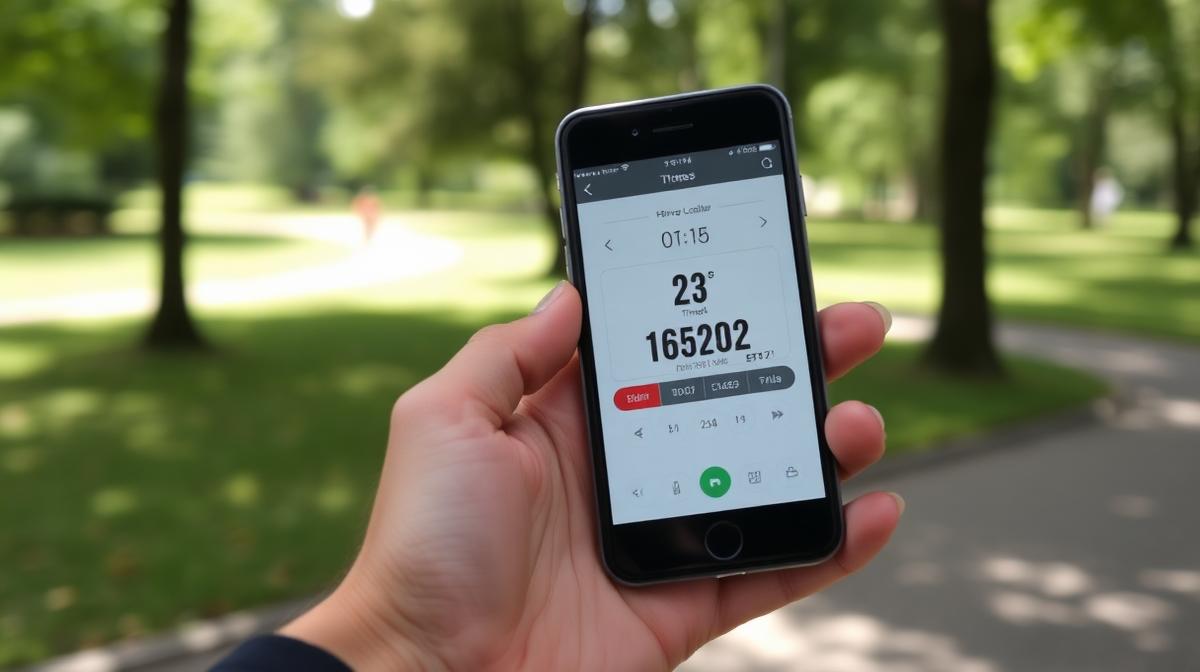
SnapStepsCalc offers three calculation modes in one simple tool. In the first mode, you enter your step count and instantly see the distance you've walked and the calories you've burned. The second mode works in reverse: enter a calorie target, and the calculator tells you exactly how many steps you need to burn that amount. The third mode converts distance to steps, so you can plan walks of specific lengths.
You can customize your weight and stride length for fully personalized results, and the calculator works entirely in your browser — no account needed, no data stored, no waiting.
Common Mistakes When Counting Steps
One of the most frequent errors is assuming that step counts are universal. Two people who both walk 10,000 steps may have covered wildly different distances if their stride lengths differ. Always account for your personal stride when interpreting step data.
Another common mistake is ignoring walking speed. A person who takes 10,000 brisk steps burns significantly more calories than someone who ambles through the same count. Speed matters — sometimes more than the step count itself.
Many people also trust their device counts without question, but wrist-based fitness trackers can be off by 5 to 10 percent. That means your "10,000 steps" might actually be anywhere from 9,000 to 11,000 in reality. And finally, terrain makes a huge difference. Walking uphill or climbing stairs dramatically increases calorie burn compared to flat surfaces, even at the same step count.
Easy Tips to Increase Your Daily Steps
The easiest way to add more steps to your day is to weave them into activities you're already doing. Take the stairs instead of the elevator. Park at the far end of the lot instead of circling for a closer spot. Walk while you're on phone calls — you might be surprised how many steps a 20-minute call produces.
Setting an hourly reminder to take a brief 5-minute walk can easily add 2,000 to 3,000 steps over the course of a workday. And one of the most underrated habits is walking after meals. A 10 to 15 minute post-meal walk not only adds 1,000 to 2,000 steps but also aids digestion and helps regulate blood sugar levels.

Tip: Adding just 2,000 extra steps per day — about 15–20 minutes of walking — can make a significant difference to your health over time.
Frequently Asked Questions
How many steps should I walk per day?
Most research suggests 7,000 to 10,000 steps per day for optimal health benefits. However, any increase above your current baseline provides measurable benefits, so don't feel discouraged if 10,000 seems out of reach right now.
How far is 10,000 steps?
For most people, 10,000 steps equals approximately 7 to 8 kilometers (4.3 to 5 miles), depending on stride length. Taller individuals will cover more ground, while shorter walkers will cover slightly less.
How many calories does 10,000 steps burn?
Between 300 and 500 calories, depending on your weight and walking speed. A 70 kg person walking at a moderate pace burns approximately 400 calories over 10,000 steps.
Is walking enough exercise?
For general health maintenance, absolutely. Walking provides cardiovascular benefits, supports weight management, improves mental health, strengthens bones, and reduces the risk of numerous chronic diseases. For muscle building or athletic performance, you may want to supplement with other forms of exercise.
How long does it take to walk 10,000 steps?
At a moderate pace of 5 km/h, 10,000 steps takes approximately 80 to 100 minutes. The good news is that this doesn't need to happen all at once — steps accumulated throughout the day count just as much.
Does walking speed matter for calorie burn?
Yes, significantly. Brisk walking at 6.5 km/h burns almost double the calories per minute compared to slow walking at 3 km/h. If you have limited time, walking faster is one of the most effective ways to maximize your calorie burn.
Can I lose weight just by walking?
Yes, provided that walking creates or contributes to a calorie deficit. Walking 10,000 steps daily combined with moderate dietary awareness is a proven and sustainable weight-loss strategy that millions of people use successfully.
How accurate are step counters?
Most modern devices are accurate within 5 to 10 percent. Wrist-based trackers tend to over-count during vigorous arm movements, while hip-mounted pedometers are the most accurate. For planning purposes, this level of accuracy is more than sufficient.