What the three numbers mean
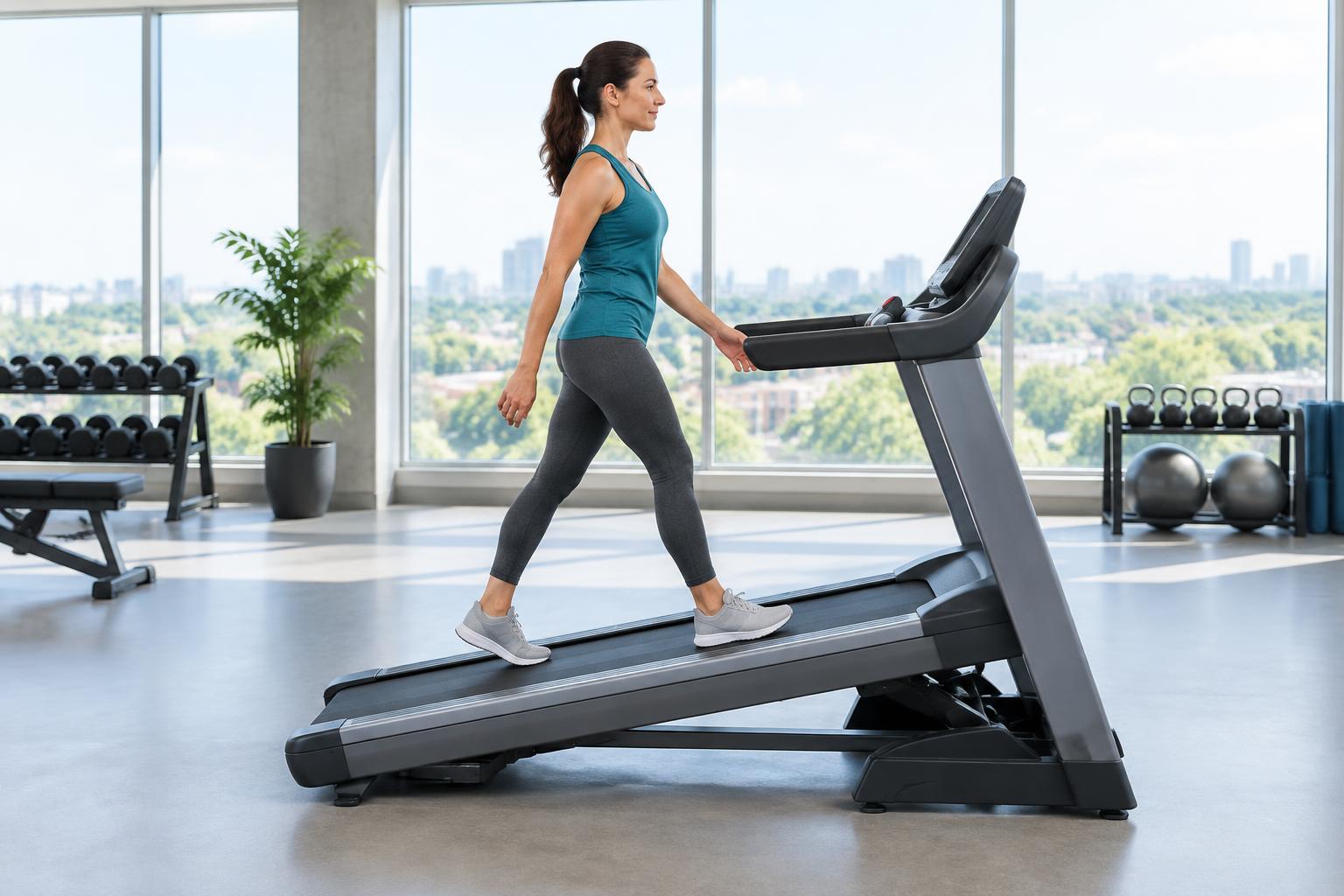
12-3-30 is a treadmill walking routine: 12% incline, 3 mph (4.83 km/h), for 30 minutes. It is a recognizable format, not a medical prescription or a requirement for an effective walk. At those settings, the grade can make a seemingly ordinary speed demanding.
| # | Setting | What it does not mean |
|---|---|---|
| 12 | 12% grade: 12 units of rise per 100 horizontal units | Not 12 degrees and not necessarily level 12 on every machine |
| 3 | 3 mph (4.83 km/h) | Not 3 km/h (1.86 mph) |
| 30 | 30 minutes of walking | Not a compulsory starting duration |
A 12% slope corresponds to an angle of about 6.84 degrees. Check the machine's manual: some consoles use levels rather than percentage grade. The USGS explanation of slope explains the distinction.
The routine is described in ACE's research discussion. Its popularity is not evidence that these exact settings are best for everybody.
A clear setup is not an instruction to jump straight in
First distinguish understanding the routine from choosing it. Someone who is new to treadmill walking, returning after illness or managing balance problems may need a much easier session. A steep grade is not automatically appropriate because the activity is called walking.
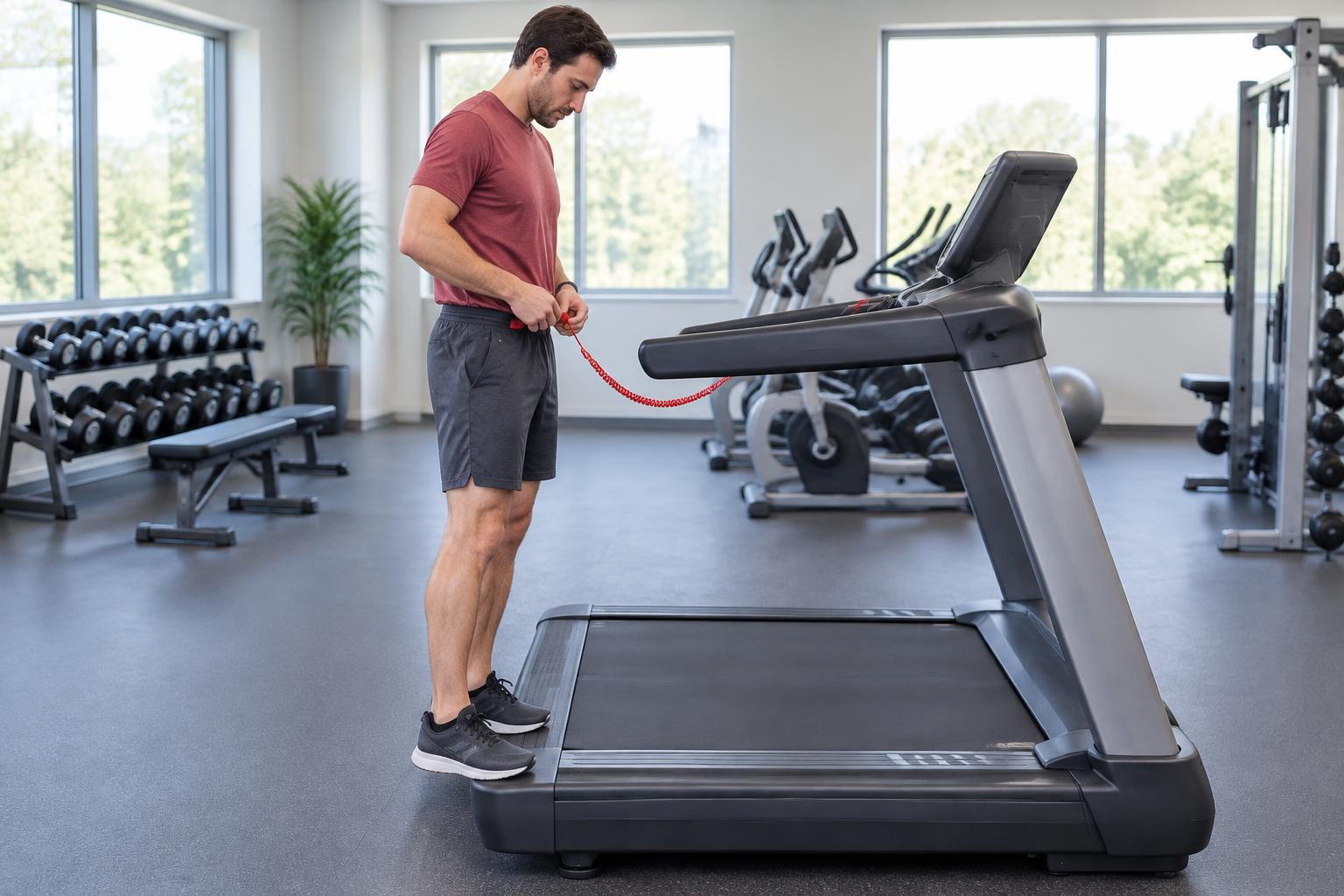
Follow the treadmill manufacturer's instructions for starting, stopping and using the safety clip. Establish control at an easy pace before considering an incline. If a setting requires leaning backward or supporting much of your weight on the rails to keep up, reduce the demand rather than chasing the label. Safety support matters more than preserving a calculator assumption.
Lowering the grade, shortening the session or choosing a comfortable speed makes it a modified incline walk—not a failed workout. No universal progression schedule follows from the studies below. Read treadmill walking: setup and session records for the separate practical task.
What has actually been studied?
Two small studies answer narrower questions than social-media before-and-after claims.
| Study | Design | Useful finding | Important boundary |
|---|---|---|---|
| Physiological responses study | 17 adults; exercise testing and a 12-3-30 session on separate days | Measured physiological response and how the session felt | One acute bout, not a long-term training trial |
| Incline walking versus running comparison | 16 participants; energy-matched treadmill sessions | Compared energy rate and proportions of fat/carbohydrate use | Acute substrate use is not subsequent body-fat loss |
The 17-person study reported an average of 5.5 ± 1.4 METs and 220.8 ± 49.7 kcal during the tested session. These are sample results with variation, not a personal calorie target. They cannot establish long-term weight loss, injury rates or superiority over other activities.
In the 16-person comparison, 12-3-30 took longer than self-paced running to reach matched total energy expenditure. The inclined walk used a higher proportion of fat and lower proportion of carbohydrate during the measured sessions. Burning a greater proportion of fat in one session does not establish greater loss of body fat over weeks.
Why a calorie calculator may disagree with a study
The existing treadmill steps calculator uses the ACSM walking equation, not the average result from either study:
Oxygen estimate = 3.5 + 0.1 × speed + 1.8 × speed × grade. Speed is in metres per minute and grade is a decimal: 12% becomes 0.12. The tool then uses body weight and duration to estimate energy.
At 3 mph (4.83 km/h) and 12% grade, that equation gives approximately 28.9 mL/kg/min, or 8.3 standard METs. This is substantially above the mean in the small study. Do not average them or treat the model as a measurement of what you personally used. They are different kinds of evidence, with different assumptions.
The equation's commonly used walking speed range is roughly 1.86–3.73 mph (3–6 km/h). Being inside that speed range does not eliminate individual differences or uncertainty at steep grades. ACSM's equation discussion explains the method, and handrail-support research shows why support changes metabolic demand.
Use estimates to understand assumptions, not to earn back food. Active and gross calories are separate views of one walk, never values to add together. Neither establishes an actual daily calorie deficit.
Distance is simpler than calories—but steps still need an assumption
Thirty minutes at 3 mph (4.83 km/h) represents 1.50 mi (2.41 km) of belt travel, assuming that speed is maintained throughout the moving session. With an illustrative one-step length of 0.74 m (29.13 in), the distance corresponds to approximately 3,262 steps.
That step total is arithmetic, not an observed count. Incline can change step length, so your flat-ground calibration may not transfer unchanged. Use step-length calibration or count steps during the actual session. Our 30-minute guide explains measured cadence and moving time.
Is it suitable for you?
Treat the routine as an option to assess, not a challenge to complete at all costs. Consider your current walking tolerance, symptoms and ability to stay balanced. A pace that feels moderate on level ground can feel much harder uphill; the brisk-walking guide explains practical effort cues.
Stop for chest pain, faintness or unusual severe breathlessness and seek appropriate help. People with significant symptoms, repeated falls, recent illness or relevant medical conditions should obtain individual advice before a demanding new routine. A small study of volunteers cannot demonstrate safety for every reader.
General adult activity guidance from CDC includes aerobic activity and strengthening. It does not require 12-3-30 or one specific treadmill setting. There is no need to force daily steep walks to satisfy the name.
Questions about the routine
Is 12 incline the same as 12 degrees?
No. A 12% grade is about 6.84 degrees. Confirm how your machine labels incline.
Can I do it at 3 km/h?
You can choose that speed, but it is not the original 3 mph setting. Choose a manageable session rather than the name.
Does it guarantee weight loss?
No. Acute energy and fuel-use studies cannot predict an individual's weight change. Walking and weight management explains why added activity and actual energy balance differ.
Must I avoid the rails even when I feel unsteady?
No. Safety comes first. Reduce the setting, stop if needed, and do not interpret a hands-free energy estimate as a measurement of a supported session.
Sources
- ACE: definition and research context for 12-3-30.
- Physiological responses of the 12-3-30 workout.
- Energy-matched incline walking versus running study.
- ACSM walking equation discussion.
- Handrail support and metabolic demand.
- USGS: percent slope and slope angle.
Bottom line: understand the units, choose settings you can control, and distinguish a popular routine from evidence of long-term results.